In light of the constitutional guarantees encapsulated under the Second Amendment to the US Constitution, which permits the right to bear arms. This right has been recognized to be an individual right, pursuant to different judicial deliberations, understood as a right which not unlimited in its nature and does not preclude long standing prohibitions District of Columbia v. Heller 554 US 570 (2008). The Supreme Court in McDonald v. City of Chicago 561 US 742 (2010) held that state and local governments are limited to the same extent as the federal government from infringing upon this right. Quite pertinent to the topic of discussion of this blog post, the United States Supreme Court held and assured that the right to carry weapons in public spaces existed, except with reasonable exceptions, New York State Rifle & Pistol Association Inc. v. Bruen 597 U.S. 1 (2022).
Under this backdrop, if a confusion remains regarding carrying a gun into an Alaskan restaurant that serves alcohol, the discussion hereunder would provide a understanding of when it is legal and how the firearm laws interact with the factual premise.
To the plain one liner question “Can I legally bring my firearm into a restaurant that serves alcohol?” and against the commonly placed misconceptions floating around, the answer isn’t a simple yes or no. The answer would depend on multiple factors such as the type of establishment and whether the actor carrying the weapon was actually consuming alcohol at the time.
Note that the Alaskan, firearm rights may be broad but they are equally restrictive and commanding in nature as to where guns and alcohol intersect.
This write up intends to analyze:
- The posture of Alaskan law
- What circumstances render the carrying of firearm in a restaurant as lawful
- Circumstances when carrying weapon becomes a crime
- Practical tips to avoid legal trouble
Misconduct Involving Weapons
The Alaska Statute § 11.61.220(a)(2), provides for what constitutes as misconduct involving weapons. At its most atomic form the provision states that a person commits the crime of misconduct in the fifth degree if the person knowingly possess a loaded firearm on the person in any place where intoxicating sold for consumption on the premises.
While this contour of law is relatively straightforward, and clearly mentions the ‘dos and don’ts’, like a architype legal provision it does come with its own set of exceptions. While the provision is straightforward in its own element, the exceptions are where most people interacting with this area of law get confused.
The Restaurant Exception
Alaska law § 11.61.220(d)(1)(B)-(C) provides for affirmative defense against prosecution for offense knowingly possessing a loaded firearm in any place where intoxicating liquor is sold for consumption on the premises.
The affirmative defense arises as (1) the firearm being concealed, and (2) the possession occurred at a place covered by a restaurant or eating place license, (3) seasonal restaurant or eating place tourism license, (4) the restaurant is not primarily a bar, and (5) the actor possessing the weapon/ firearm did not consume alcohol while carrying the firearm.
In furtherance to the defense which may be treated as an exception, an actor/ the possessor of the firearm, at the time of the possession was on business premises which were owned by or leased by the actor/ possessor.
So, to understand the defense as it is it may be said as an actor may carry a concealed handgun into a restaurant that serves alcohol so long as the actor/ possessor is not actively drinking at the restaurant and the restaurant is one that operates as a food-service establishment.
The Distinction and Implication for Restaurant vs. Bar
What can lead to a misunderstanding is distinguished as:
- Restaurant Serving Alcohol
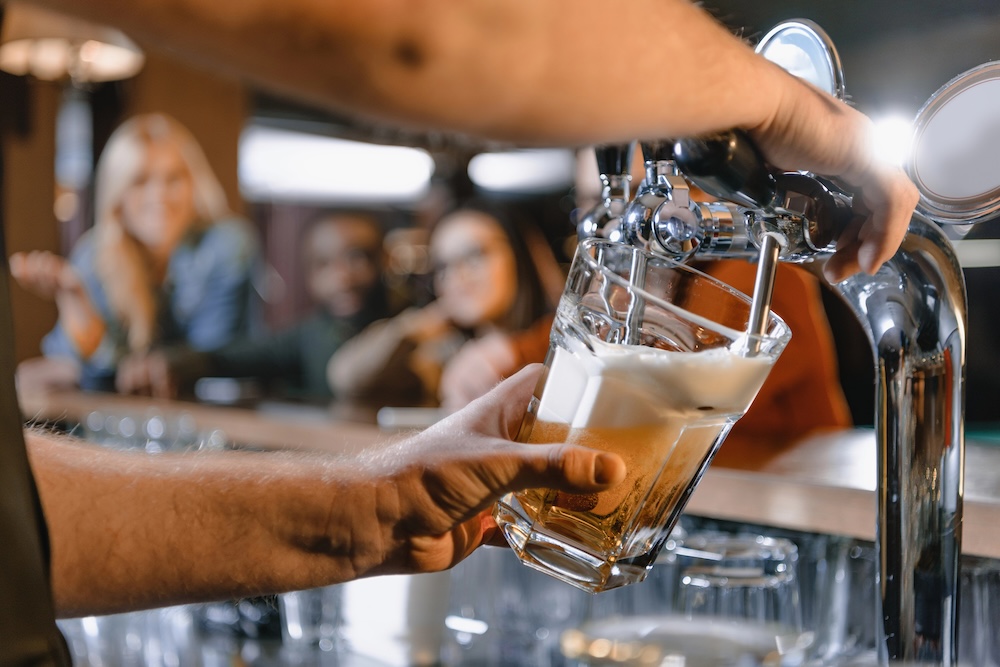
Solely because a restaurant serves alcohol along with food would not render the possession of a firearm therein subject to cognizance of an offense. The place would therefore be primarily oriented towards food services and not alcohol consumption. The presence of a valid Alaska eating place license, offering meals and along with the meals offering alcoholic beverages, in such an establishment carrying a firearm which is concealed would not violate the statutory provisions and are generally acceptable under the statute.
The key distinction is that such places are primarily oriented toward food service and not alcohol consumption.
- Bar or Bar Only Establishment
An establishment primarily designated as a bar which as its primary business activity is focused on sales and consumption of alcohol would not pose the same defense and would not qualify under the statutory exception. Therefore carrying firearms into bars or similar settings associates a higher legal risk.
Since the statute draws a clear distinction based on the primary business and licensing the assumption that Alaskan gun owners can carry firearms in the bars or other primary alcohol selling business would detract from the statutory defense.
Legal Risks in Consuming Alcohol While Carrying Firearms
A qualifying restaurant that associates the statutory protection would eventually have the protection disappeared if the actor/ possessor of firearms consumes alcohol while being armed.
As already alluded to, the statute provides and lays down one strong element of defense that the carrier did not consume intoxicating liquor at the place where they were carrying the weapon.
An actor can generally carry in a qualifying restaurant only if the actor is not drinking alcohol while doing so, and this aspect is not ambiguous. Alcohol consumption while carrying the firearm, at a defense qualifying premises renders the actor vulnerable to prosecution for misconduct involving weapons. The consumption would further aggravate the situation if the prosecution believes rather finds intoxication capable of impairing judgment.
Property Rights | Obligation to Comply with Signs, Requests, and Demands
Business owners and managers can prohibit firearms on their premises, and if restaurants, which are statutorily protected premises, adopt a “no firearms” policy or the decision-making management specifically indicates to the actor not to carry the firearm, such a request must be complied with. Refusing such a request can lead to trespass charges or other consequences, even if the statute would otherwise allow carry.
Note that despite the statutory protections and legally permitting an actor to carry the firearm, does not override a business owner’s property rights to impose further qualifications.
Common Scenarios that Cause Arrests
Carrying firearms into bar area regardless of whether food is served in the same area of in another distinct or disjointed area of the building or in another part of the building. Physically being in the area and bearing a firearm renders higher risk.
Regardless of any altercation or an unpleasant situation, consuming alcohol while being armed and having a meal could potentially lead to repercussions if a law enforcement officer leads to the conclusion that the actor/ possessor was drinking while carrying the firearm.
Accidental or conscience display of a firearm during an argument regardless of the placement being a bar or a restaurant.
Misidentifying an establishment’s license and assuming a place is a restaurant when its license or classification is really a bar can lead to charges.
Practical Ways to Avoid Liability
Knowing the business licensing and checking whether the place is a bona fide restaurant with an eating place license.
Concealing firearms attracts the statutory exception whereas open weapons carries increases risk.
While armed avoid alcohol as just a single drink could defeat the defense.
Respect business property rules
Potential Misconduct Charges
If charged with misconduct involving weapons in Alaska, penalties can include:
- Misdemeanor or felony counts depending on prior history
- Fines
- Jail time
- Criminal record
- Firearm restrictions on purchase and possession
A conviction can affect housing, employment, and future firearm rights even without a separate firearm prohibition order.
Conclusion
Carrying a firearm in Alaska comes with broad constitutional protections but also carries specific statutory limits when alcohol is involved. Understanding the difference between a restaurant and a bar, staying sober while armed, and respecting private property rules can reduce the risk.
If charged after carrying a firearm in or near an alcohol-serving establishment, contact a qualified Alaska defense lawyer right away because misunderstandings can lead to serious legal consequences.
Because each case involves specific facts and interpretations, professional legal analysis often makes the difference between dismissal and conviction.